


The Ultimate Guide to Kitchen Remodeling in Chicago: Design Trends, Budget & Planning Tips
A kitchen remodel is more than just pretty cabinets and countertops. It’s more about functionality and flow. If you’ve been sitting on the idea of a kitchen remodel for a while now, you already know the research phase can get overwhelming. Especially in 2026, as trends and technologies continue to evolve.
Whether you’re looking to upgrade your kitchen for increased functionality or increase your home’s resale value, it’s important to have a clear plan in place. This guide cuts through all of that. It covers what kitchens actually cost in Chicago right now, how long you should realistically plan, and what to look for.
Why Chicago Homeowners Are Investing in Kitchen Remodels
Kitchen remodeling has always been popular, but the reasons Chicago homeowners are doing it in 2026 are a lot more specific. A lot of it comes down to how people are living now; with more time spent in the kitchen and more awareness of what a functional space feels like on a daily basis.
The financial case is also compelling. According to the 2025 Zonda Cost vs. Value Report, a minor kitchen remodel increases the ROI by 112.9% nationally, the highest percentage tracked in the study. This is a competitive necessity for anyone thinking about selling in the next few years.
Top Kitchen Design Trends in Chicago for 2026
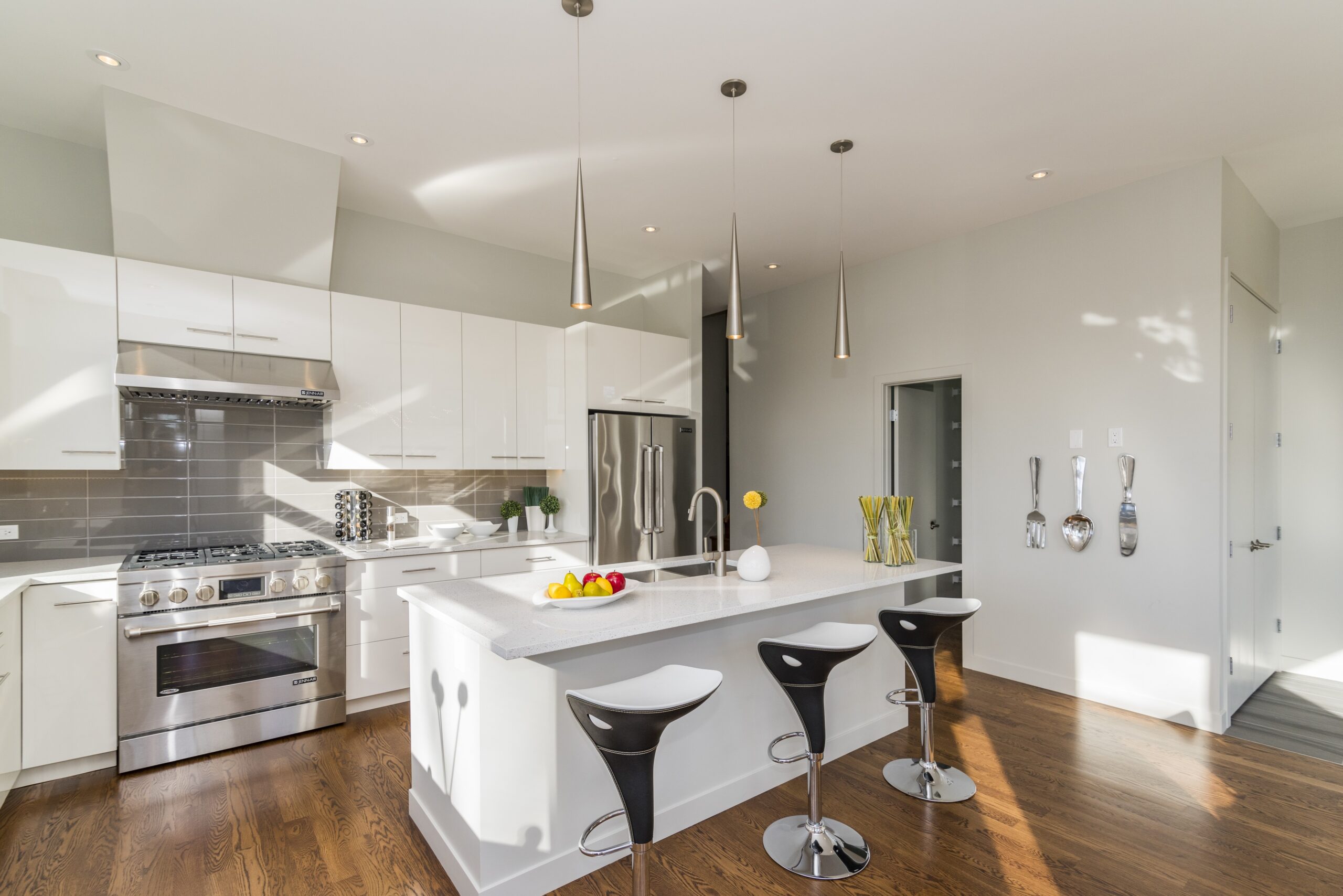
If you’ve been closely watching what Chicago’s remodelers are building lately, a few things stand out. The clean modern kitchen look is fading fast, because it’s been done to death. What’s emerging is a clear shift toward warmth, integrated systems, natural materials, and layouts that actually reflect how a kitchen gets used.
Open Concept Layouts with Smart Zoning
Fully open kitchens are still popular, but the smarter move in 2026 is moving away from fully open plans toward defined micro-zones. The layout is fully organized around specific activities like a dedicated prep area near the sink, a social island with seating, or a coffee station. This way, two people can be in the kitchen at the same time without constantly being in each other’s way.
Cabinet Styles and Finishes Dominating Chicago Kitchens
Cabinet preferences have shifted noticeably in the past couple of years. Wood has taken the lead over white cabinets for the first time in nearly a decade, according to 2026 Houzz data, with white oak at 51% of professional specifications (NKBA).
In Chicago’s market, that shows up as rift-sawn oak frames, warm walnut accents, and two-tone combinations that use lighter uppers against a deeper lower cabinet. And hardware is getting quieter: integrated finger pulls and slim edge profiles are replacing chunky handles.
(Source: Houzz 2026 Kitchen Trends Report; NKBA 2026 data)
Countertops, Backsplashes, and Surfaces
Quartz holds its position as the go-to countertop material in Chicago for its durability and finish range. The backsplash is where the more interesting choices are being made. Full slab backsplashes where the countertop stone runs vertically up the wall are becoming a common choice in mid-range and higher-end builds. Chicago home owners are also noting a shift away from busy patterned granite towards warmer toned ceramics.
Smart Appliances and Tech-Forward Kitchens
Five years ago, a smart refrigerator felt like a novelty, it has now become a fundamental planning requirement addressed before construction even begins. Chicago remodelers are building kitchens around technology from induction cooktops, app-connected appliances, and integrated lighting systems.
Layered, dimmable lighting with separate settings for prep, cooking, and ambient evening use is another smart-kitchen element that’s become standard rather than premium in well-planned Chicago homes.
How Much Does Kitchen Remodeling Cost in Chicago?
Chicago kitchen remodeling costs aren’t something you can Google your way into. Every project is different and the gap between what you expect to spend and what you actually spend can be significantly different depending on the age of your home, layout size, and the materials being used.
One number to always have ready before your project starts: your contingency budget. Set aside 15-20% above your planned spend, specifically for discoveries made during demolition. Building in the contingency from day one is what separates a project that finishes on budget from one that blows past it.
How Long Does a Kitchen Remodel Usually Take?
Plan for 8-14 weeks for a full kitchen remodel from initial design conversation to final walkthrough. Design and planning: 2-3 weeks. City permit approval: 2-3 weeks for standard scopes through Chicago’s Express Permit program (3-5 business days for licensed contractors on eligible work); 4-6 weeks for structural changes requiring plan review. Construction: 6-8 weeks for a standard mid-range remodel. Luxury or heavily structural projects can stretch to 14 weeks or beyond.
What Adds the Most Value in a Kitchen Remodel?
- Cabinetry and countertops: Buyers judge the kitchen on these before anything else, and quality here carries through the entire design.
- Lighting: Under-cabinet task lighting, ambient fixtures, and scene-based dimmable controls can transform a kitchen’s atmosphere from day to night. It’s one of the highest perceived value upgrades relative to cost.
- Layout optimization: Open or semi-open plans and the addition of an island move listings faster in Chicago’s market.
- Energy-efficient appliances: 19% of homeowners in 2025 cited energy efficiency as a primary remodeling motivation (NAR and NARI, 2025), and that number is growing.
- Smart kitchen technology: Integrated lighting and induction cooktops are becoming standard expectations for Chicago properties valued over $500K. The 2025 Zonda Cost vs. Value Report indicates that minor kitchen remodels yield a 112.9% national ROI, surpassing all other major renovation categories.
How to Choose the Best Kitchen Remodeler in Chicago or Illianois
Before a single tile is chosen or a cabinet is ordered, the most important decision you’ll make in a kitchen remodel is who you hire to do it. The contractor you choose controls everything from the quality of the work, how smoothly the project runs, and whether your budget lands where it’s supposed to.
Hire wrong and even the best design plan unravels. Here’s what to look for and why working with someone who actually knows this market makes a real difference.
What to Look for in a Kitchen Remodeling Contractor
Start with the legal basics because they matter more than most homeowners realize. In Illinois, general contractors are not licensed at the state level, licensing is handled by individual cities and municipalities. For Chicago work, a valid City of Chicago contractor license is required.
Beyond credentials, look for a portfolio of completed projects in homes similar to yours. The more telling questions are about track record. How many kitchen remodels have they completed in the past? Do they have photos and references from projects in Chicago or home remodelers Evanston Il specifically?
Planning a Home Remodel in Evanston, Il?
Whether you’re upgrading a kitchen or doing a full home renovation in Evanston, where you put that money matters. You’ll eventually find out when it’s time to sell, because in this market, the right upgrades return significantly higher than the wrong ones.
Why Local Expertise Matters
Local expertise doesn’t sound like a differentiator until something goes wrong on your project. Chicago’s housing stock is older than most cities’. Many homes in neighborhoods like Evanston were built before 1960, which means they come with a particular set of complications once the walls open up. An experienced contractor who frequently services these types of properties has likely encountered and resolved every one of those issues. If you’re curious about what remodeling an older home kitchen remodeling actually involves, we’ve covered that in detail as well.
If you want to skip the vetting process for a firm that’s already cleared every one of those bars, Coco Design & Build Co. has over 25 years of experience in remodeling Evanston with the portfolio to show it.