The White Oak Flooring Trend: Why Designers Say It Won’t Go Out of Style
Flooring trends tend to age badly. The orange honey oak of the 1990s and the gray-washed planks that filled nearly every flip house of the 2010s both had their moment, then quickly looked dated. Floors are expensive and disruptive to replace, so landing on the wrong side of a trend can mean living with a regret for a decade.
That is why the white oak flooring trend deserves a closer look. It has outlasted the usual trend cycle by a wide margin, and the designers who specify it most say it shows no sign of fading. This guide covers why, how white oak compares with its alternatives, and what to know about construction, plank width, finish, and cost before committing.
How Long Has the White Oak Flooring Trend Been Around?
Longer than most people realize. In 2021, the trade publication Floor Covering News described European white oak planks with clean lines and subdued character as the longest-running visual trend in hardwood flooring, and industry observers at the time expected demand to continue well beyond that year. Several years later, the prediction has held.
When Good Housekeeping surveyed interior designers about the hottest flooring trend designers love, white oak was the clear answer. Nicole J. Colin of Coco Design & Build Co., an Evanston, Illinois design firm, noted that the appetite for white oak is not new, observing that “this trend has remained popular for six to seven years.” She pointed to its timeless quality and its ability to brighten a room as the reasons it keeps showing up in her projects.
Trends that burn out quickly are usually tied to a single aesthetic. White oak has survived the shift from cool grays to warm neutrals and from stark minimalism to softer, layered rooms. A material that adapts to that much change behaves less like a trend and more like a classic.
Why Designers Keep Choosing White Oak Hardwood Floors
Several qualities explain white oak hardwood floors’ staying power, and they reinforce each other.
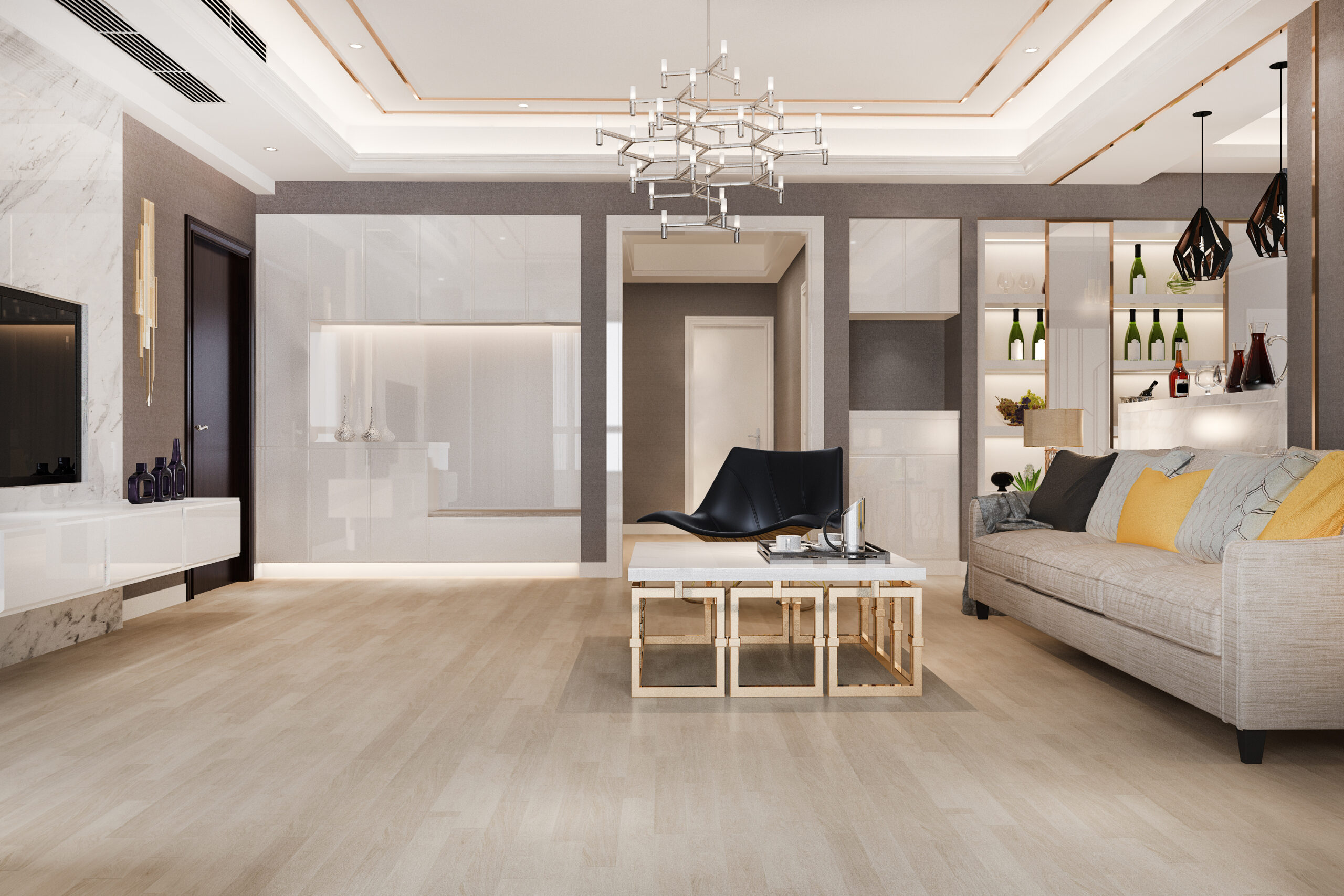
A neutral undertone. White oak leans toward soft tan, gray, and beige rather than pink or orange. That neutrality lets it sit comfortably under nearly any wall color, cabinet finish, or furniture style without fighting for attention.
It takes stain predictably. Katara Cade of Pearson Design Group told Good Housekeeping that white oak’s naturally light tone makes it easy to stain in a wide range of colors, with cooler stains suiting modern architecture and warmer treatments flattering rustic homes. One species can deliver a Scandinavian pale floor, a mid-tone natural floor, or a deep espresso finish.
It works in old and new homes alike. Designer Hill Rondero of Ro House Studio described using white oak in older homes as a deliberate contrast to traditional architecture, keeping period homes from feeling like museums.
It is genuinely durable. Dan DiClerico of the Good Housekeeping Institute called oak one of the most hard-wearing woods available and noted that its tight grain helps disguise the small nicks and scratches that inevitably appear over time.
Designers can play with plank widths. Colleen Bennett of CBB Design Firm described clients mixing several board widths in a single floor, an approach that adds subtle visual interest without introducing a new material.
Together, these qualities let white oak follow a homeowner’s taste as it evolves, the best predictor that a floor will not look dated in ten years.
White Oak vs. Red Oak: The Real Differences
Red oak is white oak’s closest relative and most common alternative, and people often confuse the two. The differences matter more than many shoppers expect.
Color. Red oak carries pink and reddish undertones that show through most stains, especially lighter ones. White oak’s cooler, more neutral base is why designers favor it in today’s palettes.
Grain and pores. Red oak has open pores, which give it a coarser, more pronounced grain. White oak’s pores are largely plugged by natural structures called tyloses, which gives it a tighter, calmer appearance and better resistance to moisture working its way into the wood.
Hardness. On the Janka hardness scale, white oak rates about 1,360 compared with roughly 1,290 for red oak. The gap is modest, and both are durable choices, but white oak has a slight edge.
Price. White oak typically costs more than red oak, partly because of demand and partly because other industries, such as barrel making, use it. Cost guides commonly put the premium at 20 to 50 percent for comparable material.
Engineered white oak can narrow that price gap, which leads to the next decision.
Engineered White Oak Flooring vs. Solid
Bennett noted in the Good Housekeeping piece that many clients are choosing the engineered route for practical reasons.
Solid hardwood is a single piece of wood, usually three-quarters of an inch thick. You can sand and refinish it many times over its life, and it remains the traditional choice for homes with wood subfloors.
Engineered white oak flooring layers a real white oak veneer, called the wear layer, over a stable core of plywood or similar material. That cross-layered construction makes it far less prone to expanding, shrinking, and cupping as humidity changes. It can also be installed where solid wood is risky or impractical, including over concrete slabs, radiant heat systems, and in basements.
The quality of engineered flooring depends heavily on the wear layer. A useful rule of thumb:
- Under 2mm: limited or no full sanding; typically a light screen and recoat at most.
- 2mm to 3mm: usually one or two full refinishes over the floor’s life.
- 4mm or thicker: multiple refinishes, behaving much like solid wood over decades.
When evaluating engineered products, ask for the wear layer thickness in writing. It is the clearest indicator of how long the floor will last and how many times you can renew it.
Wide Plank Flooring and the Details That Define the Look
Species is only part of the story. The details below shape whether a white oak floor reads as modern, traditional, or somewhere in between.
Plank width. Wide plank flooring, generally boards five inches or wider, has become the signature look of the white oak flooring trend. Wider boards show more of the grain and make rooms feel calmer and larger. The tradeoff is movement: wide solid boards are more vulnerable to cupping during humidity swings, which is another reason engineered construction has become popular for widths of seven inches and up.
Cut. Most white oak is plain sawn, producing the familiar cathedral-grain pattern. Rift-sawn and quarter-sawn boards show straighter, more linear grain and are more dimensionally stable, though they cost more. Many contemporary designs use rift and quartered white oak for its clean, uniform look.
Finish. The finish changes the color as much as the stain does. Water-based polyurethanes keep white oak pale and close to its natural tone, oil-based finishes add an amber warmth that deepens over time, and hardwax oils create a soft, low-sheen look that is easy to spot-repair. Matte and low gloss finishes dominate current designs because they hide dust, footprints, and minor scratches.
Among the best flooring trends 2026 has produced, the most enduring share a theme: natural texture, softer color, and quieter finishes. White oak delivers all three.
What White Oak Means for Home Design in Chicago
Climate and housing stock both shape how white oak performs. Chicago swings between cold, dry winters with forced-air heat and humid summers, so solid floors often show seasonal gaps in winter and slight cupping in summer. Engineered white oak handles these cycles more gracefully, and a winter humidifier that keeps indoor humidity within the manufacturer’s specified range (often 30-50 percent) protects any wood floor.
Chicago also has many condo buildings with concrete subfloors, where glue-down or floating engineered flooring is usually the practical option, and many associations require acoustic underlayment, so confirm the building’s rules before ordering. In older bungalows and two flats, a pale white oak can modernize a period interior without erasing its character.
For anyone considering a larger project, treat flooring as part of the whole plan rather than a standalone purchase. Chicago home design professionals typically coordinate floor color, plank direction, and transitions with cabinetry, trim, and lighting so every element works together from room to room.
The kitchen is where that coordination matters most. Decide early whether the new floor will run under the cabinets or stop at their base, since that choice affects future layout flexibility, and plan for moisture near the sink and dishwasher, where engineered white oak with a durable finish generally performs better than solid boards. Anyone comparing kitchen remodeling services in Chicago should ask how each contractor sequences flooring with cabinet installation and what moisture testing they do before the floor goes down.
Design-build firms that handle planning and construction under one roof can simplify these decisions. For example, Coco Design & Build’s design-build process moves through consultation, design planning, and material selection before construction begins, giving homeowners a chance to finalize flooring details. At the same time, changes are still easy and inexpensive.
Frequently Asked Questions
How long will the white oak flooring trend stay popular, or is it just a fad?
Every sign points to staying power. Industry trade coverage called white oak the longest-running hardwood trend as early as 2021, and designers interviewed years later still rank it first. Its neutral tone, stain flexibility, and compatibility with both modern and traditional homes let it evolve with changing tastes rather than being tied to one look. The most future-proof approach is a natural or lightly stained finish, since very dark or very gray stains are most likely to date.
White oak vs. red oak flooring: what’s the real difference?
White oak is cooler in tone, tighter in grain, more moisture resistant, and slightly harder (about 1,360 Janka versus roughly 1,290). Red oak shows pink undertones and bolder grain and usually costs less. Both are durable, so the choice usually comes down to color and budget.
Is white oak flooring durable enough for pets and kids?
Yes, with realistic expectations. White oak is one of the harder common domestic hardwoods, and its tight grain helps hide small scratches. No wood floor is scratch-proof, though, and the finish takes most of the daily wear. Matte or low-sheen finishes, wire-brushed textures, and slightly lighter or mid-tone colors disguise wear better than high-gloss or very dark floors. Trimming pet nails, using felt pads on furniture, and wiping up spills promptly will extend any finish’s life, and solid or thick-wear-layer engineered floors can be refinished when needed.
What does white oak flooring typically cost per square foot?
National cost guides commonly place white oak material at roughly $4 to $8 per square foot, with installed totals often in the $8 to $16 range. Wide planks, rift and quartered cuts, premium finishes, and extensive subfloor work can push past $20 per square foot, and labor in large metro areas usually sits at the upper end. Engineered and solid overlap in price, so choose construction for performance. An itemized written quote that separates material, labor, and preparation is the only reliable number.
Is engineered white oak better than solid white oak?
Neither is universally better. Engineered is more stable, handles wide planks and humidity swings more reliably, and can go over concrete and radiant heat. Solid can be refinished more times and works well over wood subfloors. An engineered floor with a 4mm or thicker wear layer can rival solid for longevity. The right choice depends on subfloor, climate, plank width, and how long the homeowner plans to stay.
The Trend
White oak has earned its reputation by adapting at home, in a new build or a century-old house, and under pale or dark palettes. Chosen thoughtfully, with the right subfloor construction and a finish that suits the household, it should still feel current long after today’s other trends have moved on.