

Mosaic Tile Trends 2026: How to Bring Timeless Art Into Your Home
Mosaic tile trends in 2026 are evolving far beyond basic decorative trim, establishing themselves as a defining surface element across bathrooms, kitchens, and versatile living spaces. This year’s trends are defined by tactile finishes, vivid natural stone structures, and detailed geometric layouts that combine elegance with modern flair. Marble mosaics lead this shift, bringing architectural rhythm, depth, and fluid movement that transform both home and commercial environments.
Modern designers are using mosaic tiles to define spatial identity, bringing beautiful patterns to backsplashes, vanity surrounds, shower walls, and feature floors in place of uniform fields. From classic herringbone and bold hexagons to intricate basket weave compositions, 2026 is all about transforming mosaics into curated and impactful design statements.
Why Mosaic Tile Trends Are Taking Over Homes in 2026
Designers keep circling back to the same word this year: texture. Homeowners, after years of seeing kitchens and baths dominated by large-format, low-pattern tile, are now looking for surfaces that offer more visual interest up close.
Mosaics carry a rich history; however, over the last ten years, their role has been minimized to simple borders and trims of large-format tiles, no more. One interior designer quoted in House Beautiful’s 2026 texture roundup called it a “quiet renaissance..” “The way light pools on mosaic tile and settles between the tesserae, there’s a nostalgic tactility that we’ve been missing.” says interior designer Alison Roe.
Handmade mosaic tiles fit that instinct naturally, since they never come out perfectly uniform, providing a bespoke, artisanal quality. Small color variations and imperfect edges evoke a sense of authenticity that manufactured options cannot replicate. Mosaic sheets handle awkward layouts, around outlets, and curved shower niches in ways that large-format tiles struggle to achieve. This trend isn’t just an aesthetic; it’s a functional solution to common design challenges homeowners have faced for years.
Top Mosaic Tile Ideas for 2026
Mosaic Backsplash Designs
Because a backsplash is small enough to go bold without overwhelming the room, mosaic backsplash designs remain the most requested. Earthy neutrals and terracotta tones are especially popular now, pairing well with warm wood cabinetry that’s also trending back into kitchens. Aqua and seafoam glass mosaics are showing up a lot in bathrooms too, paired with brass or matte black fixtures for contrast.
Mosaic Floor Design
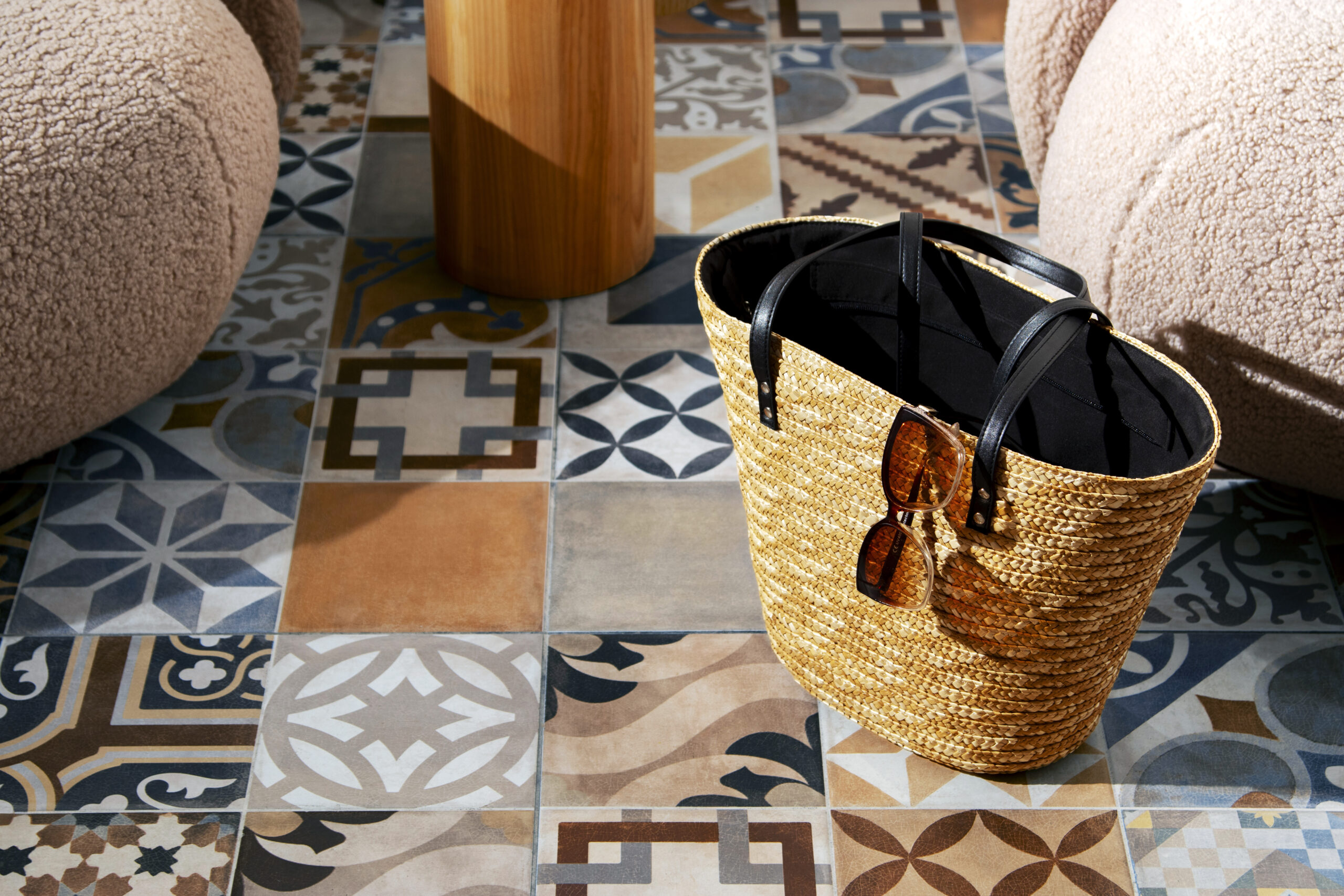
Mosaic floor design is the bigger shift this year. Where Mosaic used to live almost exclusively on walls, 2026 is spinning things around and putting it on the ground, entryways especially. Some designers are calling these “mosaic welcome mats”: a permanent tiled rug pattern at the front door.
Natural stone mosaics are also having a full moment on floors, particularly pebble-sized tumbled stone in bathrooms that feel more old-world than the glossy glass mosaics of past trend cycles.
Rather than tiling an entire wall in mosaic, designers are deliberately mixing it with plain field tile. A band of intricate tile breaking up a stretch of simple porcelain adds depth without the cost or visual noise of covering everything.
How to Style Mosaic Tiles in Every Room
In 2026, styling mosaic tiles across every room focuses on quiet luxury, organic minimalism, and tactile surfaces. Instead of covering entire spaces, use tone-on-tone or linear finger mosaics to highlight specific zones, wrap curves, and ground rooms in warm, earthy neutrals.
Kitchens
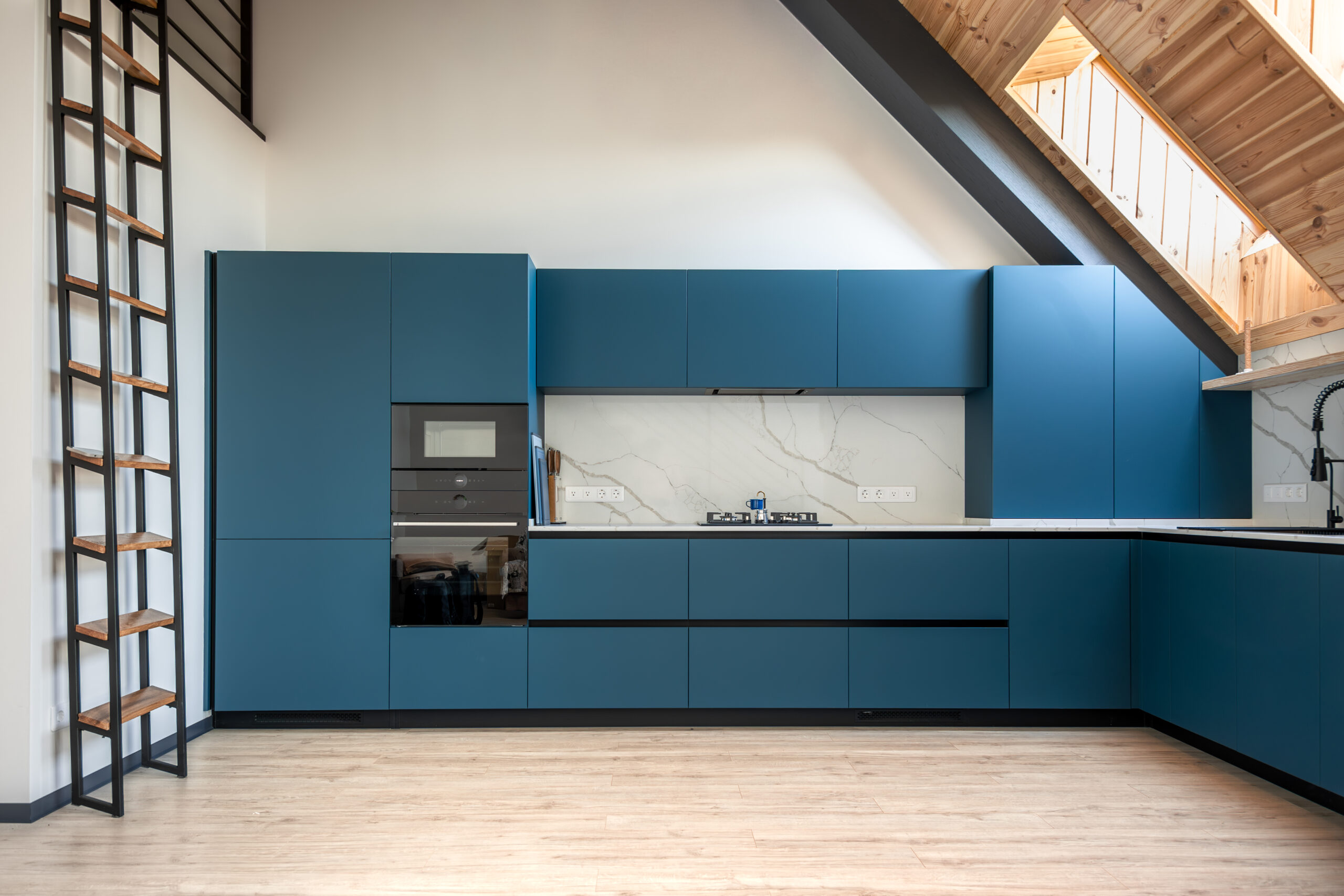
In a kitchen, mosaic works best concentrated in one zone (behind the range, framing a window, or as a border between countertop and upper cabinets) rather than running the full backsplash. If you’re planning a renovation, make backsplash placement decisions early, since they affect cabinet layout. Our kitchen remodeling guide covers sequencing those decisions so you’re not retrofitting tile around finished cabinetry.
Bathrooms
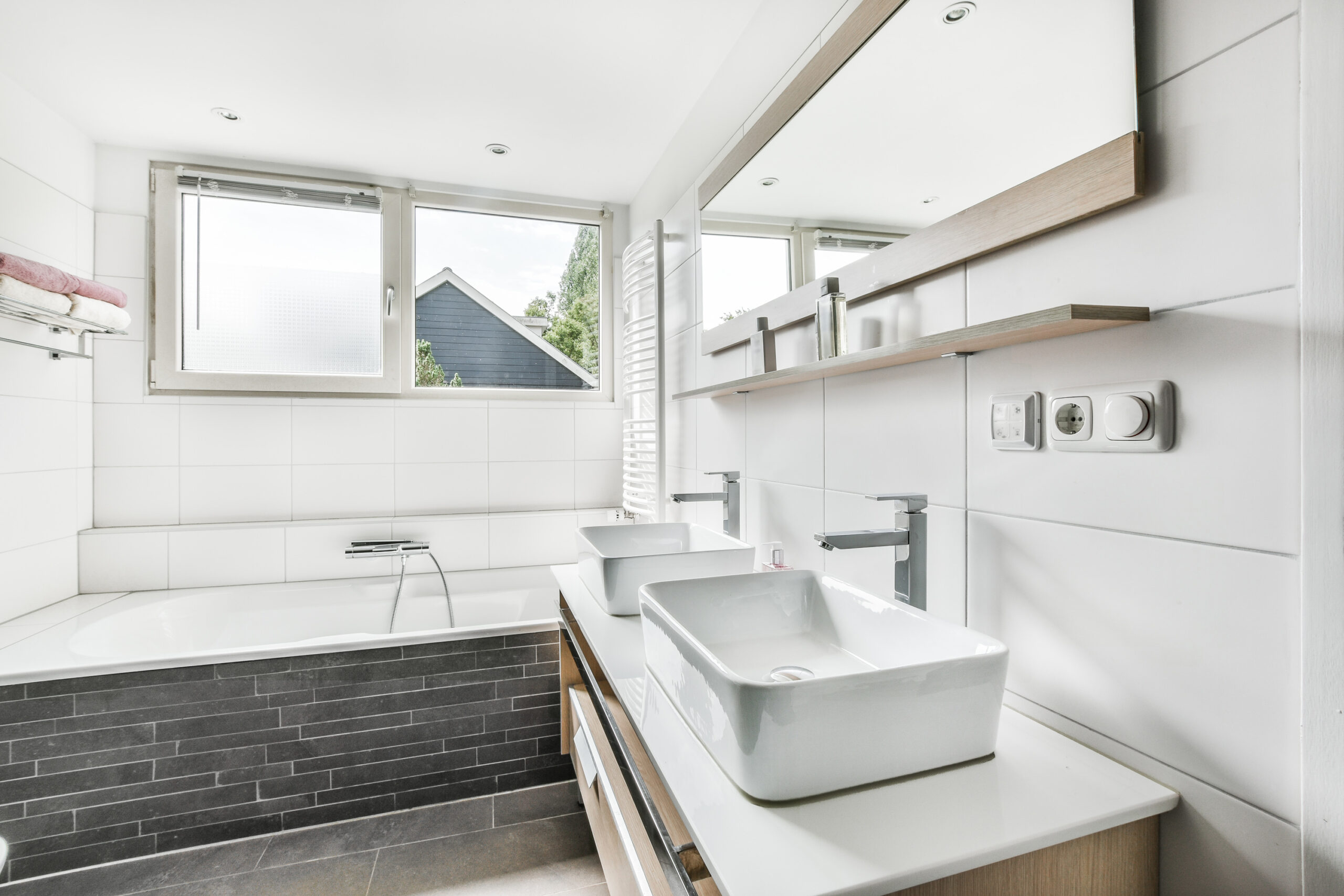
Bathrooms allow you to be bolder because the surfaces are smaller. Mosaic feels curated rather than busy when used on shower niches, tub surrounds, and accent walls. This year’s popularity stems from their ability to add pattern without competing with fixtures: Moroccan-inspired motifs and matchstick layouts. Outdoor spaces are catching up too, as long as the material is rated for exterior use.
Living Rooms and Entryways
Mosaic tiles add artistic flair to living spaces and entryways. They bring creativity to your living space with their small, intricate pieces. Available in glass, ceramic, and stone, they offer eye-catching visuals.
Install bold geometric or chevron mosaic floor tiles to define a specific seating area or create a visual pathway. Apply textured or fluted stone-look mosaics to small feature walls, fireplace surrounds, or entry foyers.
How to Choose the Right Mosaic Pattern for Your Home
The easiest mistake with mosaic tile is picking a pattern because it looks good on a showroom sample. Your room’s existing color palette, how much natural light it gets, and how much visual noise the space can handle are key factors in determining which pattern will elevate your space rather than overwhelm it. Also, consider professional installation for complex designs, as the precision required for grout lines and pattern alignment can impact both the final look and the overall cost.
If you’re drawn to two mosaic looks, choose the bolder one in a smaller, contained area and let the calmer option cover more square footage. Since small samples rarely capture the full impact of patterns and subtle color variations across a larger surface, it is best to request larger samples or view full-scale installations whenever possible to ensure the final result aligns with your vision.
Ready to make your interiors truly one of a kind? Explore our guide to personalizing your home design to learn how to translate your unique style into beautiful material choices that feel cohesive and intentional.
Frequently Asked Questions
What makes mosaic tiles a good choice for small spaces?
Mosaic tiles are a great choice for small spaces because their small size and dense grout lines trick the eye into seeing a larger area. They easily fit curved surfaces and tight corners, provide better slip resistance on wet floors, and reflect light to brighten compact rooms.
Are mosaic tiles expensive to install?
Generally, yes, in both material and labor. In Chicago, mosaic tiles typically run between $10 and $20+ per square foot for material alone. It costs more for natural stone or handmade options, and installation labor runs higher since setting hundreds of small pieces together takes longer than laying large tiles.
Can mosaic tiles be used outdoors?
Yes, mosaic tiles can be used outdoors on patios, walls, and garden accents, provided you choose frost-resistant materials like porcelain, vitrified glass, or dense natural stone, and use exterior-grade thin-set mortar and sealed grout.
How do I choose the right mosaic pattern for my home?
Start with the room’s existing palette and lighting rather than the pattern itself. Warmer tones tend to work in kitchens and living spaces, while cooler blues and greens look great in bathrooms. If you’re drawn to a busy pattern, use it in a smaller, contained area, so it doesn’t look cluttered.
Bring Mosaic Art Into Your Home Today (CTA)
Mosaic tile trends in 2026 aren’t a fleeting Pinterest moment. They’re pulling from a design tradition thousands of years old, which is probably why the look keeps coming back. Whether you’re planning a full kitchen overhaul or just a mosaic accent wall, getting the placement and material right makes all the difference in creating a space that feels timeless.
If you’re weighing how mosaic fits into a larger remodel, our trending home remodeling ideas for Evanston homeowners is a good next read.
Have a mosaic project in mind? Get in touch and let’s talk through what fits your space.